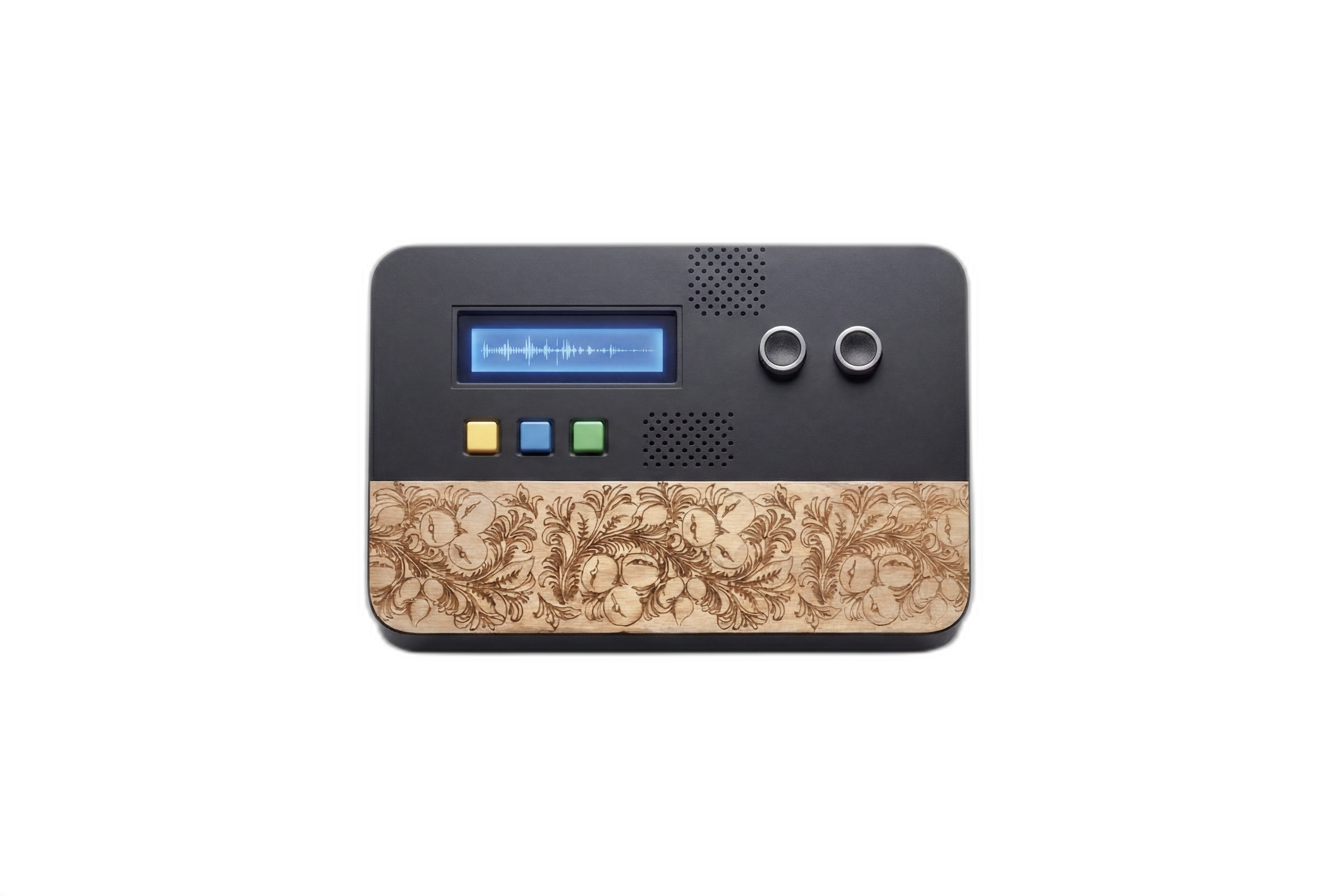
[PRODUCT DESIGN · FABRICATION · MARKETING]
A compact air purifier redesigned for the spaces people actually live in
Most air purifiers need 50cm of floor space. This one fits in a corner — two MERV-13 filters in an L-shape, no tools needed, under £40 from a hardware store.
Skip to Final Design ↓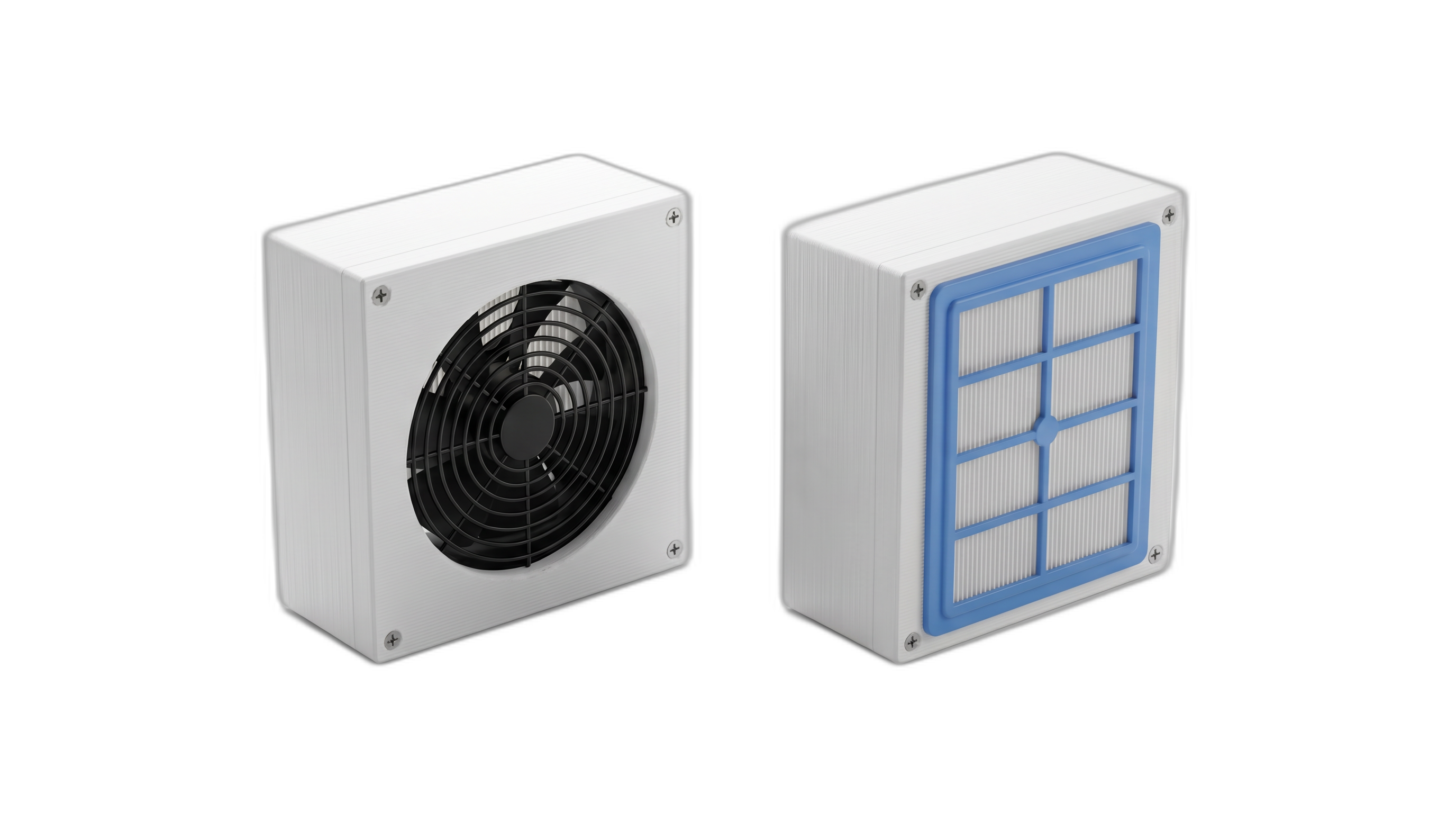
SCOPE
Product Design Fabrication Build Documentation
ROLE
Solo. User research, mechanical design, physical prototyping, laser cutting, and go-to-market documentation.
[PROBLEM SPACE]
The most effective air purifier format is too big for the rooms where air quality matters most.
The standard four-filter square configuration requires a 50×50cm footprint and projects into the room on all sides. For the average UK student bedroom (under 10sqm) or shared flat, this is a non-starter. The filter-to-fan ratio on that design is well-established: four 20×20-inch MERV-13 faces to a single box fan. The design challenge was reducing that footprint without gutting the filtration logic. The constraint: no specialist tools, no custom components, no ordering online.
[CONCEPT]
Same filtration logic. Forty percent smaller footprint. No tools required.
Two MERV-13 filters are arranged in an L-configuration rather than a square, reducing the footprint from four filter faces to two. The unit sits in a corner: the two adjacent walls act as passive airflow guides, directing intake air toward both filter faces and partially compensating for the reduced filtration area. CADR (Clean Air Delivery Rate) drops relative to the four-filter format but remains above the threshold for rooms under 20sqm. The fan sits on top facing up, pulling air through both filter faces simultaneously. Build time is under 20 minutes. The instruction set fits on one side of A5.
[PROCESS]
Research and Geometry Testing
The first stage was working out whether corner placement could genuinely substitute for the missing filter faces. Two-filter L-configurations reduce total filter area by 50%, which under normal conditions halves CADR. Corner deployment partially recovers this by redirecting ambient airflow: at 90-degree wall junctions, air pressure from room circulation is guided toward both filter faces rather than dissipating. I tested three room configurations to check whether this effect was consistent across different wall materials and room sizes. It was consistent enough to proceed. The design locked in: two filters, corner-only placement, fan on top.
Prototyping
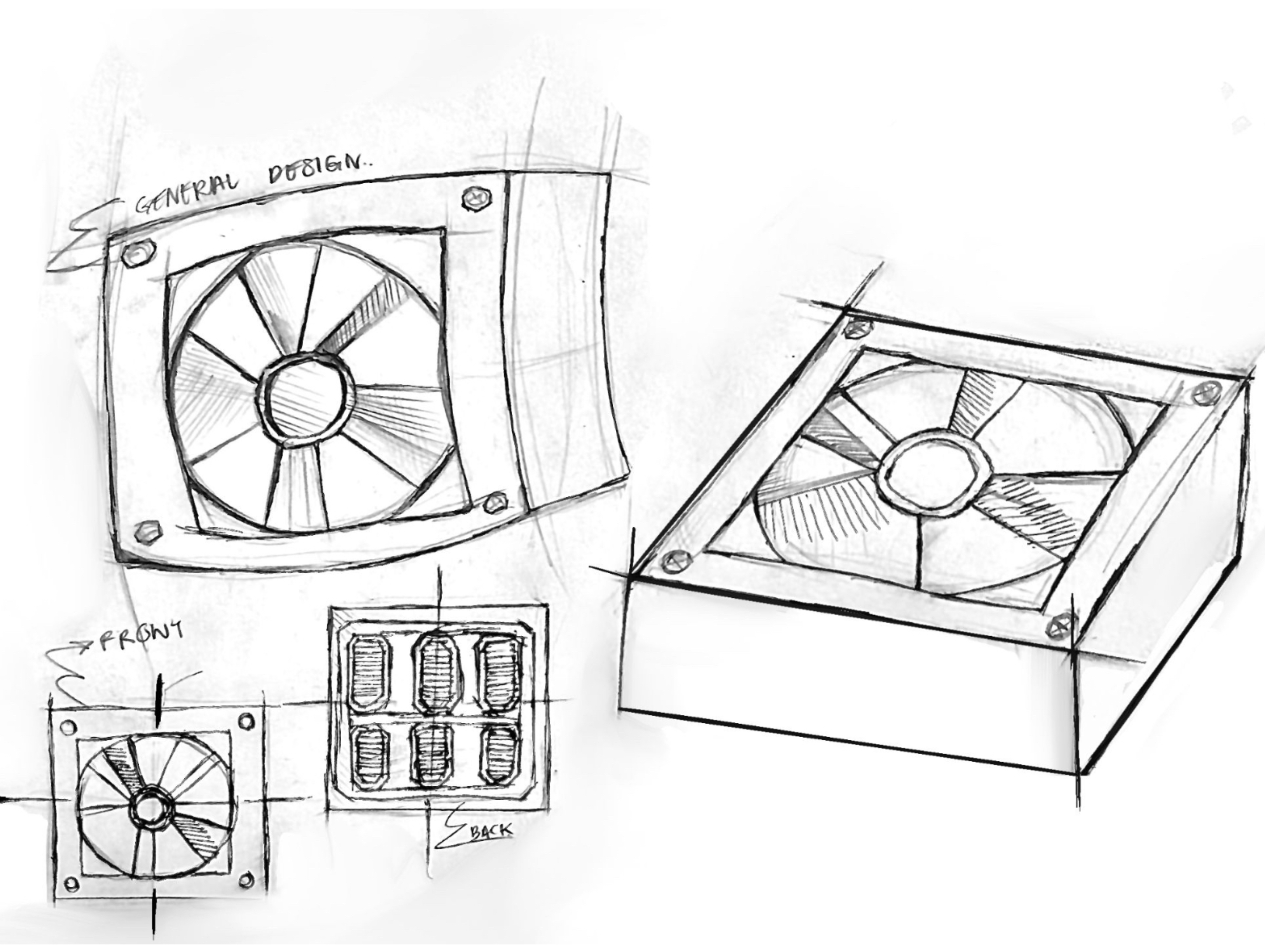
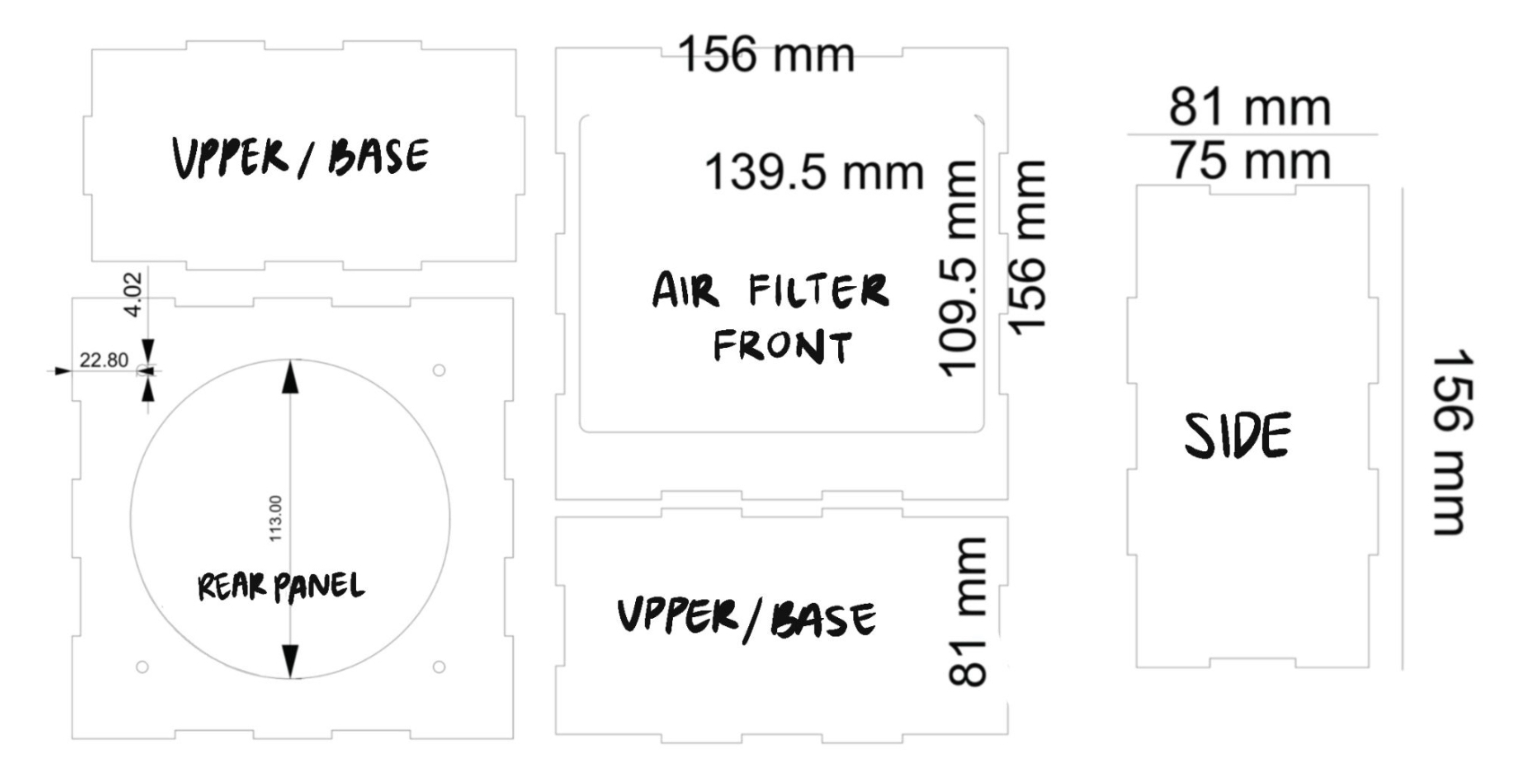
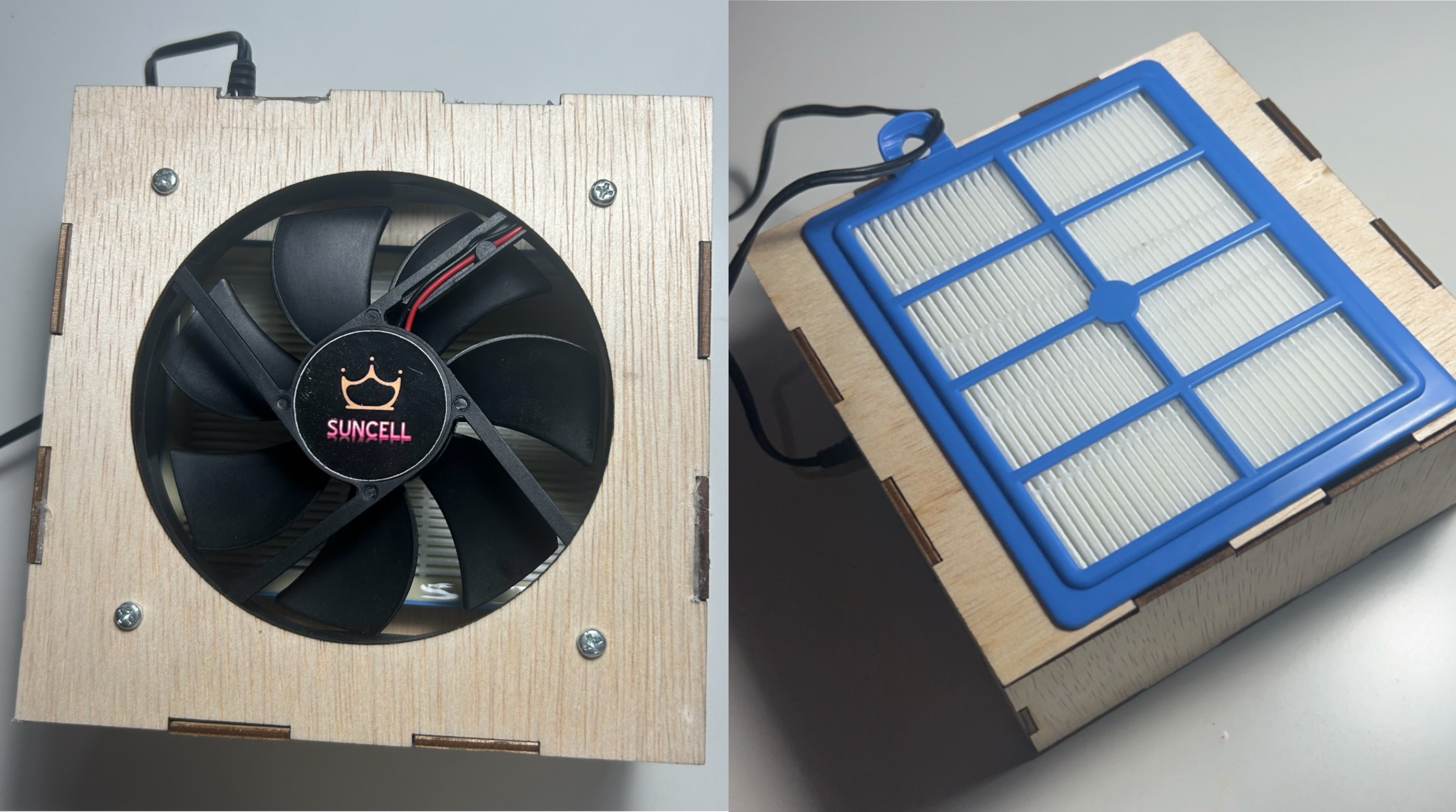
First build used two MERV-13 20×20-inch filters, a 20-inch box fan, and duct tape at the join. Functional but not structurally sound for repeated assembly. I moved the join to a laser-cut 6mm MDF bracket, designed with a friction-fit tongue-and-groove that holds both filter faces at exactly 90 degrees without adhesive. The bracket is flat-pack: ships in an envelope, assembles in under two minutes. No tools. No glue.
Material Specification
Full bill of materials: two MERV-13 20×20-inch filters (£12–16 each), one 20-inch box fan (£18–24), one laser-cut MDF bracket (£2–4 if self-cut, designed for 6mm sheet with 0.2mm kerf compensation). Total: £32–44 depending on sourcing. All components are stocked at B&Q, Screwfix, or equivalent. The bracket file is designed for a standard 600×400mm laser bed. Assembly requires no tools. Disassembly is full and reversible.
[FINAL DESIGN]
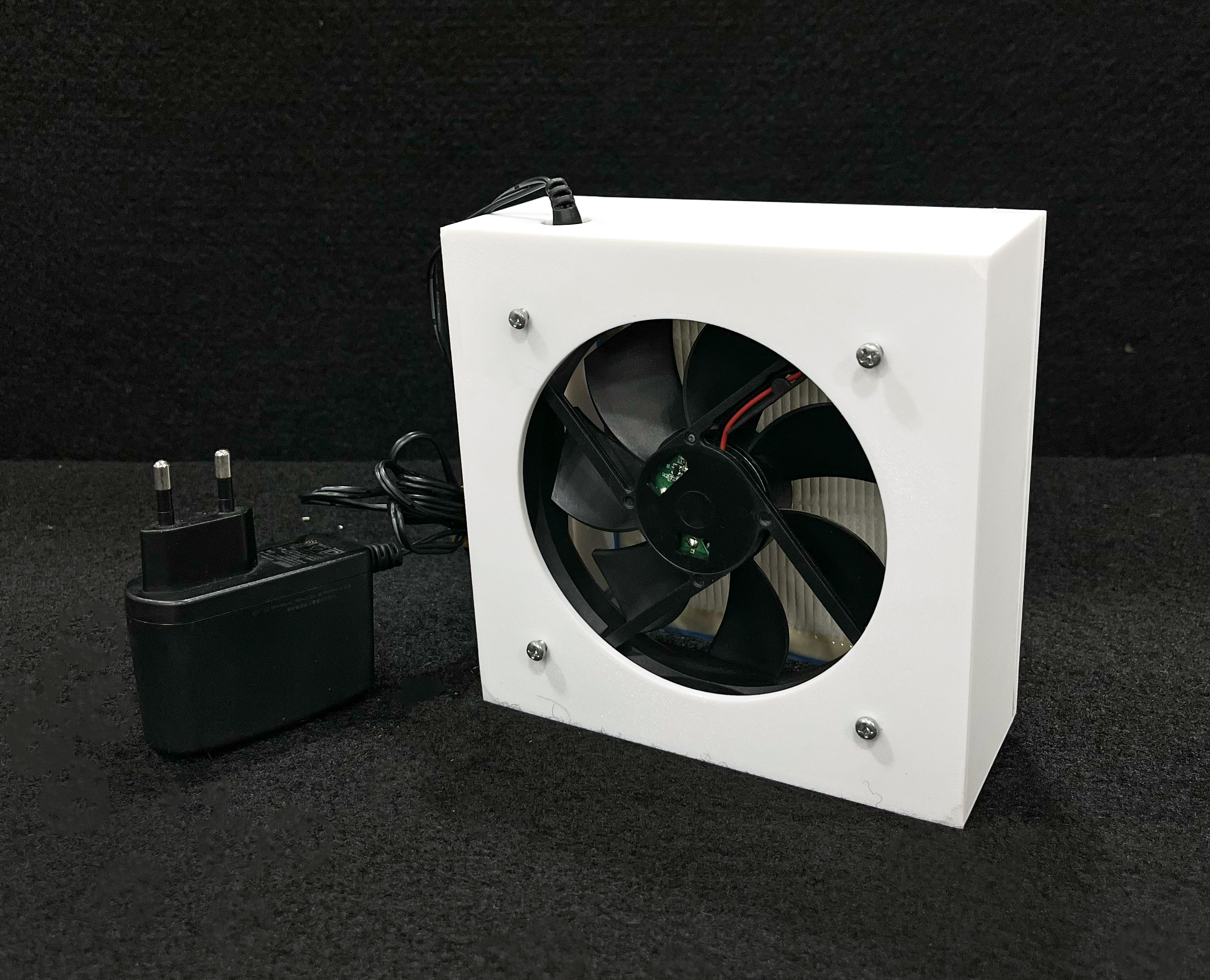
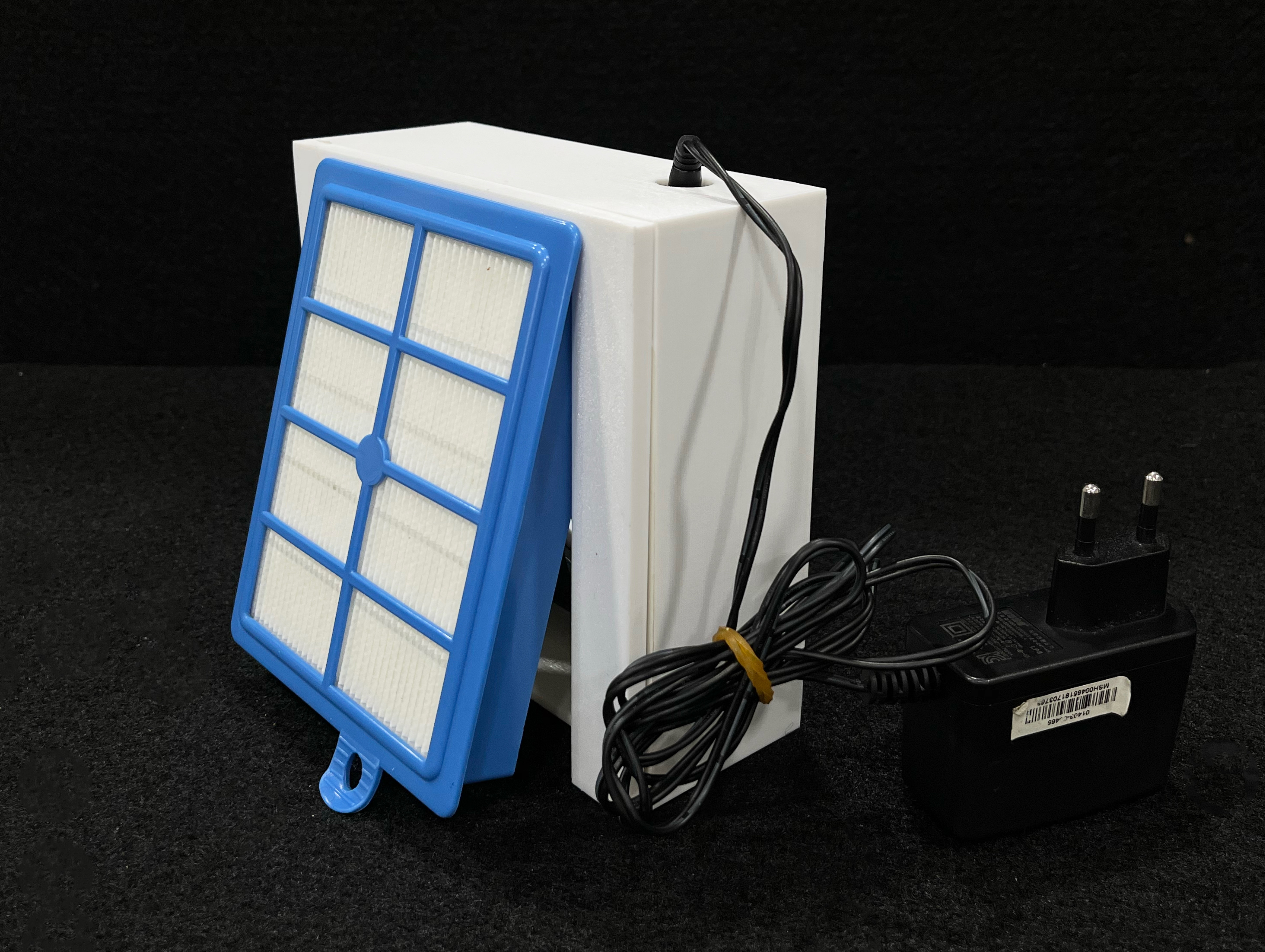
Redesigned Air Purifier
Compact. Corner-deployed. Under 20 minutes to build. No tools. Under £40.
[REFLECTION]
What I would do differently.
The instructions needed more work than the object
I spent most of the project on the physical design. But when I tested it with people who had never built anything before, the object itself was fine. The instructions weren't. "Friction-fit joint" means nothing if you've never assembled flat-pack before. A v2 would photograph every step at 1:1 scale, no text, and run it past someone who'd never seen the product.
The CADR claim needs a particle counter
The corner-placement airflow guidance argument is geometrically sound and consistent in informal testing across three room configurations. But "consistent in informal testing" is not a measured CADR figure. A rigorous v2 would run the unit against a calibrated particle counter in a sealed room and publish the numbers. Until then, the efficiency claim is directionally correct but not independently verified.